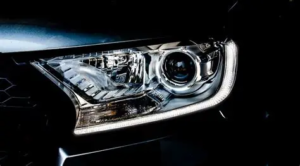
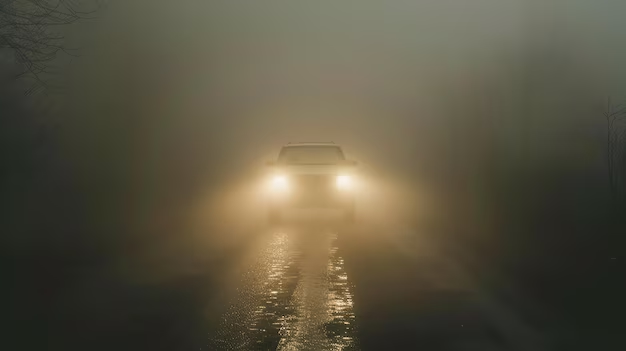
Driving in adverse weather conditions—be it dense fog, heavy rain, blinding snow, or thick dust storms—is one of the most stressful experiences a driver can face. In these situations, standard high beams or even low-beam headlights often fail to provide adequate visibility. Instead of illuminating the road ahead, regular headlights can bounce light directly back into your eyes, creating a blinding “glare effect.”
This is precisely where fog lights come into play. Uniquely designed to cut through harsh weather elements, fog lights are not just an aesthetic add-on; they are a critical safety feature. In this comprehensive guide, we will explore why fog lights are indispensable for severe weather driving, how they function differently from standard headlights, and compare the two most popular bulb technologies: Halogen vs. LED.
Understanding the Physics: How Fog Lights Work
To appreciate the importance of fog lights, it is essential to understand how fog affects light transmission. Fog consists of tiny water droplets suspended in the air. When strong light from high beams hits these water droplets, the light refracts and scatters in all directions—a phenomenon known as backscatter.
Fog lights are engineered specifically to combat backscatter through two key design characteristics:
- Low Mounting Position: Fog lights are positioned low on the vehicle’s front bumper, usually just a foot or two above the ground. Because fog typically hovers a few inches off the road surface, low-mounted fog lights can shine underneath the fog layer.
- Wide and Flat Beam Pattern: Unlike headlights, which project light far down the road, fog lights project a wide, short, and sharp horizontal beam. This wide beam illuminates the road edges, lane markings, and immediate hazards without scattering light upward into the driver’s line of sight.
Why Fog Lights Are Essential for Adverse Weather
1. Eliminating Glare and Backscatter
Using high beams in heavy fog or snow is a dangerous mistake. High beams shine directly into the moisture particles, creating a white wall of glare. Fog lights eliminate this issue by directing light downward toward the pavement, giving you a clear view of the road surface immediately in front of your bumper.
2. Enhanced Road-Edge Visibility
During low-visibility driving, staying within your lane is a major challenge. The broad spread of fog light illumination lights up road shoulder lines, curb edges, and ditch lines. This prevents vehicles from drifting off the road or into oncoming traffic.
3. Increased Visibility to Other Drivers
Safety is a two-way street. Fog lights not only help you see the road, but they also make your vehicle significantly more visible to oncoming traffic and pedestrians without blinding them.
Halogen vs. LED Fog Lights: The Ultimate Comparison
When choosing or upgrading fog lights for your vehicle, the debate usually comes down to two choices: traditional Halogen vs. modern LED (Light Emitting Diode) technology. Let’s analyze how they stack up against each other across key factors.
| Feature | Halogen Fog Lights | LED Fog Lights |
| Brightness & Lumens | Moderate (approx. 700–1,000 lumens) | High (approx. 2,000–4,000+ lumens) |
| Color Temperature | Warm Yellow/Amber (~3000K) | Crisp White to Amber (~3000K–6000K) |
| Lifespan | 500 – 1,000 Hours | 30,000 – 50,000+ Hours |
| Energy Efficiency | Low (draws high wattage, generates heat) | High (low energy draw, runs cool) |
| Cost | Budget-friendly upfront | Higher upfront cost (long-term savings) |
Deep Dive: Halogen Fog Lights
Halogen technology has been the automotive standard for decades. Halogen bulbs work by passing electricity through a tungsten filament enclosed in halogen gas.
- Pros:
- Affordability: Halogen bulbs are inexpensive to buy and replace.
- Warm Color Penetration: Traditional halogen bulbs produce a warmer, yellowish light (around 3000K). Warm light has longer wavelengths, which penetrate moisture particles slightly better with less scatter.
- Cons:
- Short Lifespan: They burn out much faster due to heat buildup and filament degradation.
- High Power Consumption: They convert a significant portion of energy into heat rather than light.
Deep Dive: LED Fog Lights
LED technology has revolutionized automotive lighting in recent years. Instead of filaments, LEDs generate light through solid-state electronics.
- Pros:
- Superior Brightness and Clarity: LEDs produce a sharp, focused beam that makes road markings and road signs pop instantly.
- Exceptional Longevity: An LED fog light can easily outlast the lifetime of the car itself.
- Instant Ignition: LEDs achieve full brightness instantly with no warmup delay.
- Color Flexibility: Modern LED fog lights come in both pure white (6000K) and specialized golden-yellow (3000K) spectrums.
- Cons:
- Higher Initial Cost: Purchasing high-quality LED replacement kits requires a larger initial investment.
Color Temperature: Should You Choose Yellow or White Fog Lights?
A common question among vehicle owners is whether yellow or white fog lights are better.
- Golden Yellow (3000K): Yellow light has longer wavelengths and suffers less Rayleigh scattering. It is widely considered the absolute best option for extremely dense fog, heavy rain, and snowstorms.
- Pure White (5000K – 6000K): White LED fog lights offer a modern, sleek aesthetic that matches LED headlights. They excel in moderate rain, dark country roads, and poor night lighting conditions, offering superior contrast.
Pro Tip: Many modern aftermarket LED fog lights now offer dual-color functionality, allowing drivers to switch between 6000K White for normal night driving and 3000K Yellow at the flip of a switch when bad weather hits.
Best Practices for Using and Maintaining Fog Lights
- Use Them Only When Necessary: Fog lights are designed for severe weather. Turning them on during clear nights can dazzle oncoming drivers unnecessarily.
- Proper Alignment is Crucial: Even the best fog lights will fail to perform if misaligned. Ensure they are angled slightly downward to avoid aiming into oncoming eyes.
- Keep Lenses Clean: Dirt, mud, and road grime accumulate rapidly on low-mounted fog lights. Regularly clean the lenses to maintain maximum lumen output.
Conclusion
Upgrading or properly maintaining your fog lights is one of the most effective safety enhancements you can make for your vehicle. While traditional halogen bulbs remain a budget-friendly option, LED fog lights offer unmatched brightness, energy efficiency, and longevity that make them well worth the investment for any driver facing unpredictable weather.